
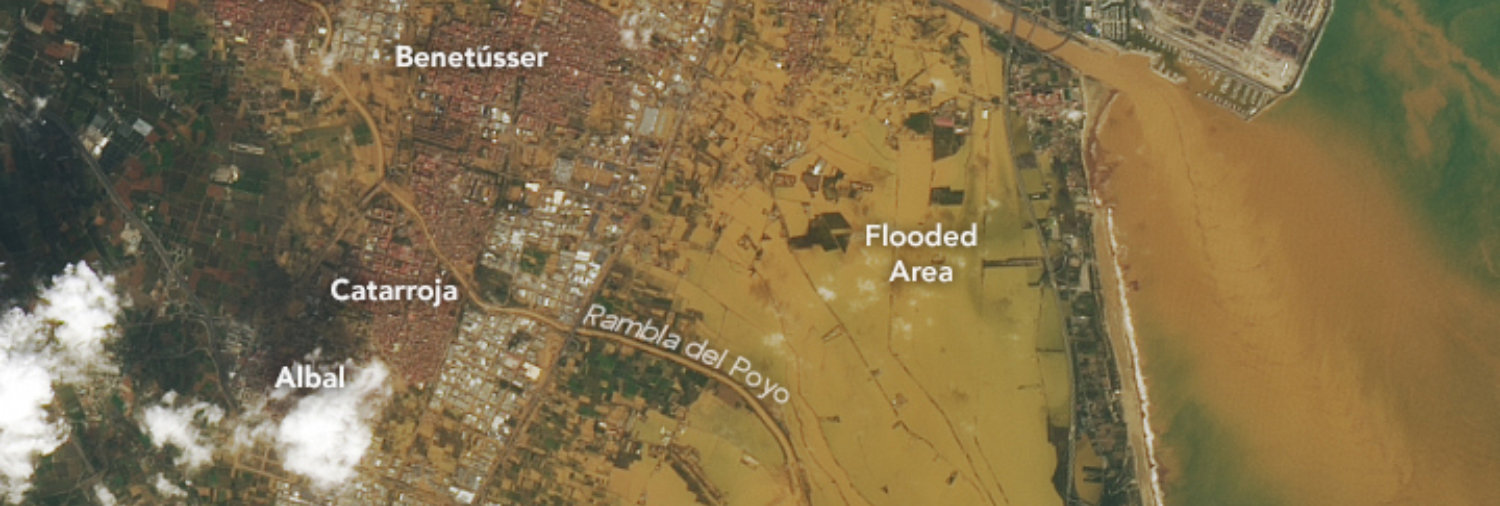
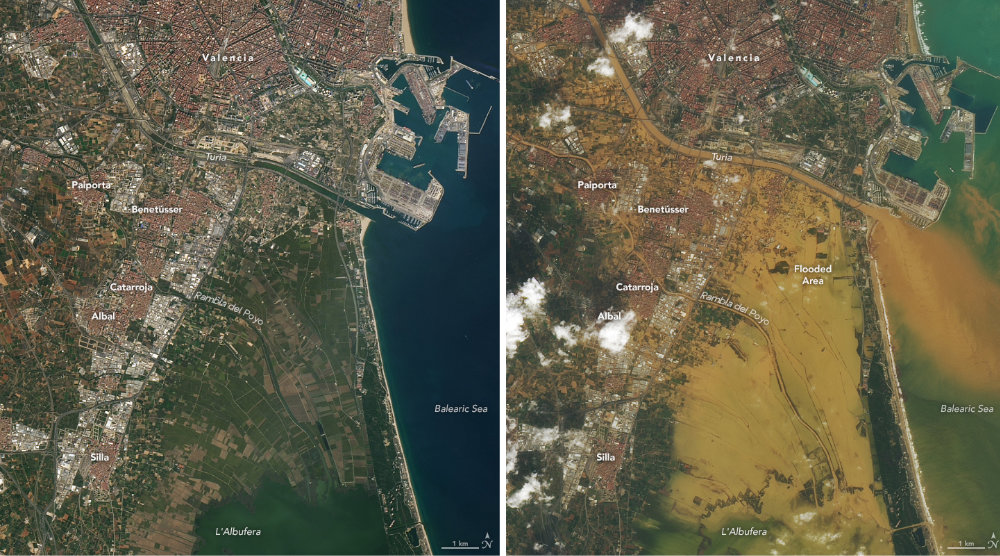
Spain continues to grapple with the aftermath of devastating floods that have claimed at least 205 lives, making it the deadliest natural disaster in the country’s recent history. The eastern region of Valencia has been the hardest hit, with 202 fatalities reported in the area. As rescue efforts persist, authorities warn that the death toll may rise further.
The floods were triggered by intense rainstorms that battered extensive areas of Spain this week. In Chiva, a town west of Valencia, nearly 20 inches of rain fell within just eight hours on Tuesday, an amount typically seen over an entire year. The disaster has been attributed to a cutoff low, a low-pressure system that detached from the jet stream, bringing warm, moist air from the Mediterranean Sea towards the eastern coast.
As the search for missing persons continues, harrowing details of the tragedy have emerged. In Valencia’s La Torre neighborhood, where water levels reached chest height, seven bodies were recovered from an underground parking facility. In Paiporta, described as the “epicenter of the tragedy,” at least 62 people lost their lives, including six in a nursing home.
The disaster has sparked criticism of the authorities’ response, with many residents claiming that warnings came too late. Reports indicate that Valencia’s regional civil protection did not send out cell phone warnings until around 8 p.m. on Tuesday, after 48 hours of heavy rainfall had already caused significant flooding.
As the southwest faced heightened alerts on Friday, rescue teams along the eastern coastline were still sifting through debris, including displaced vehicles and homes devastated by mudslides. The Spanish defense ministry has deployed an additional 500 military personnel to assist with rescue operations.
The floods have also posed a political challenge for Spain’s coalition government. Prime Minister Sánchez visited the national meteorological agency’s office in Madrid on Friday, a move interpreted as a gesture of support for the agency, which has faced criticism for allegedly issuing warnings too late.
Climate scientists warn that this disaster serves as a precursor to the severe storms expected to increase in frequency due to human-induced climate change. As temperatures rise, warmer air retains more moisture, amplifying the chances of heavy rainfall. The Mediterranean Sea has experienced exceptionally high temperatures recently, contributing to the intensity of the rainfall.
In the business sector, Spanish companies are grappling with the economic impact of the floods. The insurance industry is bracing for a surge in claims, with early estimates suggesting that payouts could reach into the billions of euros. The agricultural sector, particularly in Valencia, known for its citrus production, has been severely affected, with extensive damage to crops and infrastructure.
The tourism industry, a crucial component of Spain’s economy, is also feeling the effects of the disaster. Many coastal resorts in the affected areas have been forced to close temporarily, and there are concerns about potential long-term impacts on visitor numbers. However, industry leaders are emphasizing that many popular tourist destinations remain unaffected and are open for business.
Spain’s largest banks, including Santander and BBVA, have announced measures to support affected customers and businesses. These include offering moratoriums on loan repayments and providing emergency credit lines to help with recovery efforts.
The Spanish stock market has shown resilience in the face of the disaster, with the IBEX 35 index remaining relatively stable. However, shares in some insurance companies and construction firms have seen increased volatility as investors assess the potential financial implications of the floods.
In response to the crisis, the Spanish government has pledged significant financial support for the affected regions. The Minister of Economy and Digital Transformation has announced plans for a special credit line to assist businesses in the recovery process. Additionally, discussions are underway about potential tax relief measures for affected individuals and companies.
Despite the challenges, some economic analysts see potential opportunities in the reconstruction efforts, which could provide a boost to the construction sector and related industries in the coming months. However, they caution that the overall economic impact will depend on the speed and effectiveness of the recovery process.
The renewable energy sector, which has been a growing focus for Spain in recent years, has largely escaped major damage from the floods. Industry leaders are emphasizing the importance of climate-resilient infrastructure in future energy projects.
Looking ahead to the weather forecast for the next three days, Spain can expect continued unsettled conditions, particularly in the southern and eastern regions. On Saturday, the southwestern part of the peninsula will face the most challenging situation, with a high risk of further flooding. Instability is expected to persist through Sunday, with heavy rainfall and thunderstorms likely in Andalusia, Murcia, and parts of Valencia. By Monday, conditions are forecast to improve slightly, but scattered showers and thunderstorms will remain a possibility in coastal areas. Temperatures will be cooler than average for this time of year, with highs ranging from 15°C to 20°C in most regions. Residents and visitors are advised to stay informed about local weather alerts and follow any safety instructions issued by authorities.